
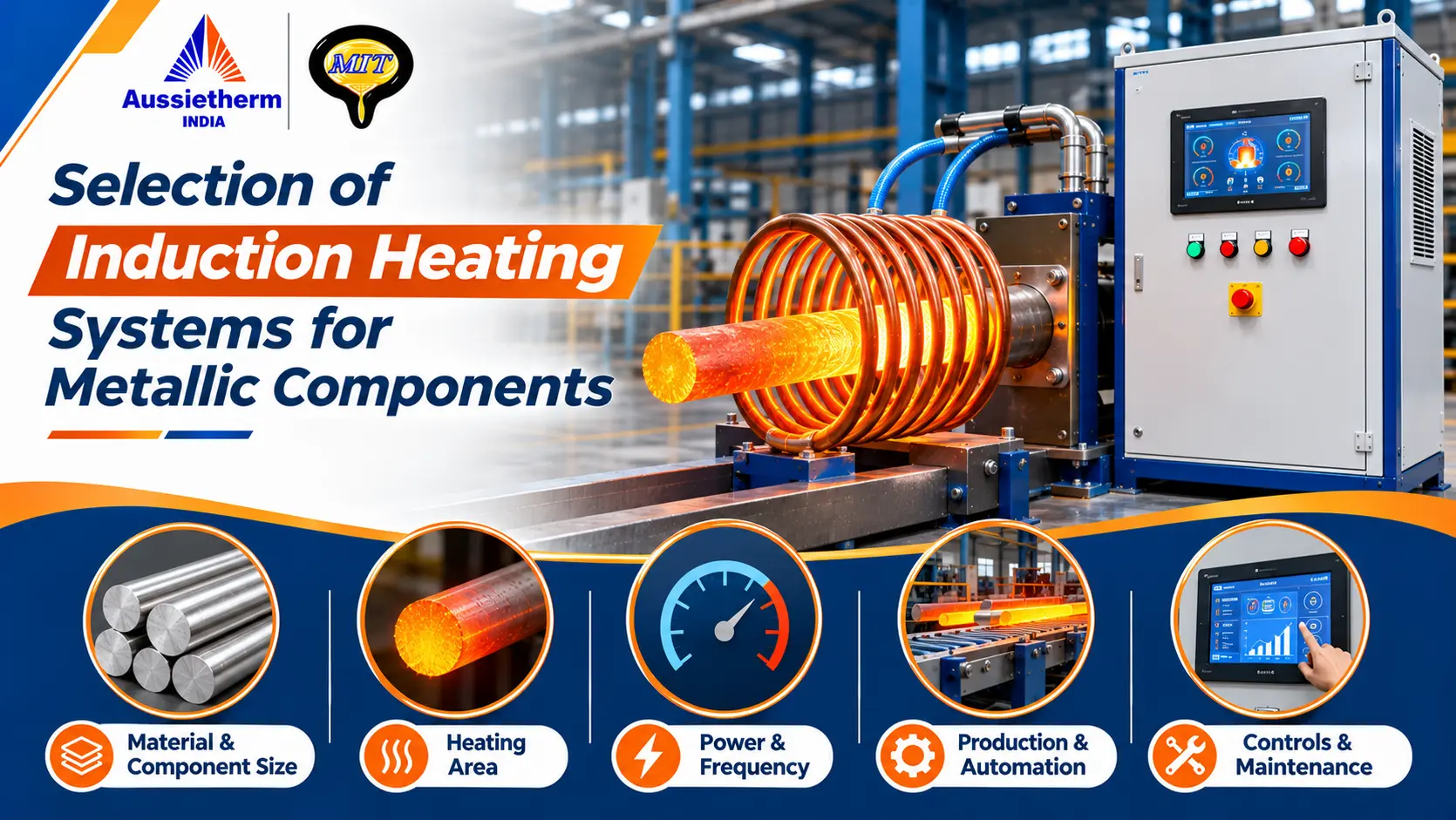
Selection of appropriate heating systems is essential when handling metal components for manufacturers. Various materials require different heating temperatures and heating zones depending on the time. The heating conditions required for a steel bar may not be the same for a small machine component or long metal rods. Hence, the Induction Heating Equipment must be selected based on the material type, size of component, and its intended use.
Aussie Therm India provides solutions for induction heating in industries involving heating of bars, rods, billets, and components. Knowledge about the key factors involved in selection will aid manufacturers in selecting equipment suited to their requirements.
Understand the Material and Component Size
The first thing is to find out what kind of metal requires heating. There could be different heating methods for steels, stainless steels, copper, aluminium, and other types of metals. It would be important to take into account the geometry of the component to be heated.
For instance, heating a long metal rod requires a different configuration than that of a smaller component. Manufacturers must take into account the length, diameter, weight, and geometry of the workpiece before selecting equipment.
This will give a rough idea of the requirements of the heating equipment.
Identify the Required Heating Area
Not every manufacturing process requires the entire component to reach the same temperature. Some operations need uniform heating along the full length, while others require heat only at one end or a selected section.
1. Full-Length Heating
The process is effective where a greater length of the rod/bar/billet needs to be heated before the next manufacturing process. It will depend on the size of the component and production rate needed.
2. End Heating
End heating is useful when only one end of a metal part needs to be heated. It can be considered for applications involving bar ends, rods, tubes and certain machine components.
3. Localised Component Heating
Some processes require heating a specific area of a component. In these cases, the heating arrangement should match the required section and temperature. The component design and production process should be discussed before choosing the final setup.
Check Power and Frequency Requirements
Some of the technical aspects which need to be taken into consideration while purchasing Induction Heating Equipment are power and frequency, as per the material being used, size of the component, depth of heating, temperature requirement, and heating time.
Just because high power is available does not mean that the system will be suitable for all applications. It is necessary to match the system to the actual heating job. It is necessary to get details of the process from the manufacturer so that the power and frequency requirements can be decided.
Some of the power and frequency ranges offered by Aussie Therm India in its induction heating products include a power range of 15kW to 8,000kW and a frequency range of 1kHz to 100kHz.
Consider Production Volume and Automation
Another important aspect is the amount of production. A workshop performing sporadic runs would have different needs compared to a factory where heating of components takes place all day.
When considering an option, one should take into account how many pieces would be heated during one shift, how it will be loaded and unloaded, and what amount of time is allocated for the heating of each piece. Job insertion and job sensing might be necessary in some cases.
The manufacturer should communicate his needs to the producer of the system.
Review Controls, Installation and Maintenance
Equipment controls should allow operators to monitor and adjust the process according to operating requirements. Temperature control, operating displays, safety protections and suitable cooling arrangements are important points to discuss during equipment selection.
Installation space and utility needs must also be considered before purchase. Buyers need to inquire about electrical connections, the need for cooling water, training, maintenance and technical support.
By inquiring about these aspects from an Induction Heating Equipment Manufacturer, buyers can know all about the specifications and installation needs of the equipment.
Select Equipment Based On The Application Requirement
It all starts with accurate information regarding the metal, size of components to be heated, heating zone area, and production requirements. The customer is advised to take into account their real needs in the manufacturing process rather than the cost and wattage of the machine.
An Induction Heating Equipment Manufacturer will be able to offer guidance on this front. For your metal heating application, contact Aussie Therm India today!
