
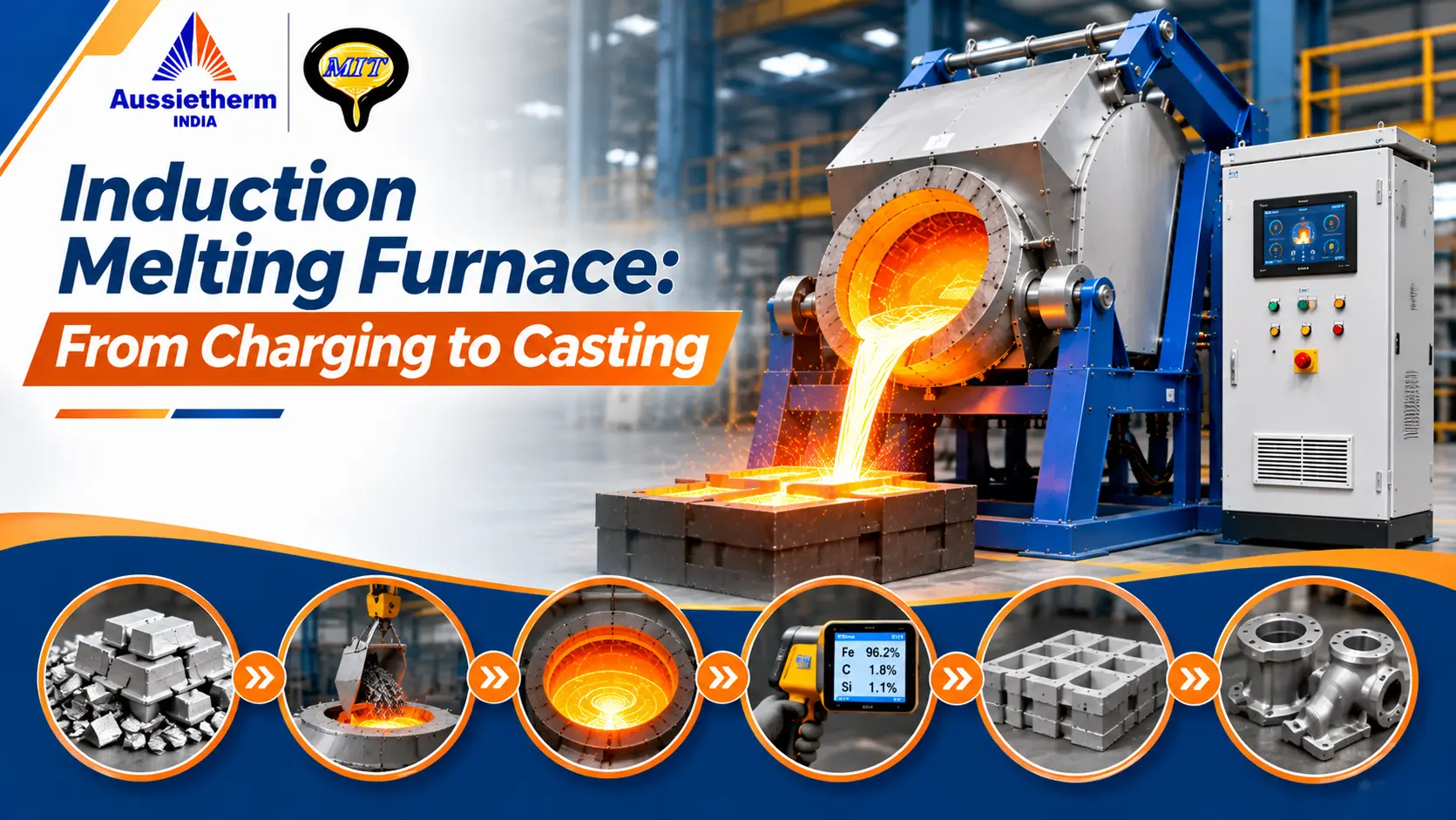
The process of melting the metal is part of the processes that are conducted within foundry premises before the metal is cast. It involves preparation of the metal, charging of the metal into the furnace, melting, examination of the state of the metal, and pouring of the metal into the moulds. Aussie Therm India specialises in industrial heating systems for metal processing applications.
Preparing the Metal before Charging
The first step is the selection and preparation of the metal charge. Based on the casting process, the metal charge could contain ingots, metal charges, or metal scraps. It is important to inspect the metal charge for any foreign objects before loading it.
Additionally, the amount of metal should also be considered. Operators should consider the capacity of the furnace and the loading instructions. The choice of metal and casting will dictate the metal charge needed for the process.
Loading the Furnace Correctly
After preparation, the metal charge can be charged in the furnace using the recommended technique. This will depend on the furnace type, sizes of the metals, and the number to be charged.
The operators should charge the system with proper amounts, and they should also follow safety precautions while using the equipment. Overcharging the furnace is not advisable as it may cause problems. Careful loading also helps the team manage the material according to the planned melting cycle.
Managing the Melting Stage
Following the charging process, the electric power moves to the induction coil, creating a varying magnetic field that heats the metal, slowly converting the solid metal into molten metal.
The Induction Melting Furnace is used to heat various metals, including iron, steel, copper, and aluminium, among others, depending on the design of the equipment. The time taken to melt the metal depends on the nature of the metal, volume of material, initial temperature, and available power. Operators must be careful while operating.
In this step, the team is supposed to ensure that the machine is working as it is supposed to work. Adhering to the operating instructions will help achieve this.
Checking Metal Composition and By-products
After the melting process is completed, the next phase will involve the inspection of whether the metal fulfils the requirements of the required casting. Certain applications have specified ratios of elements required, and the metal will need to undergo testing before approval is granted.
A certain form of waste product that can arise during the melting process is slag. By-products will need to be controlled depending on the metal being used.
The above steps aid in determining whether there is anything else required. The appearance of molten metal alone may not be enough to confirm its composition or suitability for a particular casting.
Preparing for the Pouring Stage
Before the pour, the moulds, the transfer systems, and the pour system should be ready. The metal must attain the right temperature required for the pour.
This is because when the metal is not at the right temperature, it may influence the manner in which it fills the moulds and solidifies. The melting and the pouring processes should be well coordinated to avoid delays.
The Induction Melting System is a component of the larger foundry system. While selecting a particular system, the foundry should take into account the metal, the amount of metal to be melted, and the pouring arrangements.
Moving From Melting to Casting
The liquid metal must be transferred and then poured into the mould. It subsequently solidifies and assumes the desired form. Additional processing steps can also include removal of excess material from the castings, their cleaning, and inspection.
The duration between melting and pouring should be controlled considering the type of metal and the casting process. Proper coordination would facilitate the execution of the steps in the desired sequence.
The choice of the Induction Melting System should take into account the operational requirements of the foundry business and metal handling requirements. Overall consideration of the process facilitates the integration of melting equipment into the production process.
Conclusion
The metal charge preparation up to metal pouring is an important step in the production process in foundries. Following the correct procedure helps operators control the melting process and prepare the metal for casting. Aussie Therm India can be contacted to discuss industrial heating applications and suitable equipment options.
