
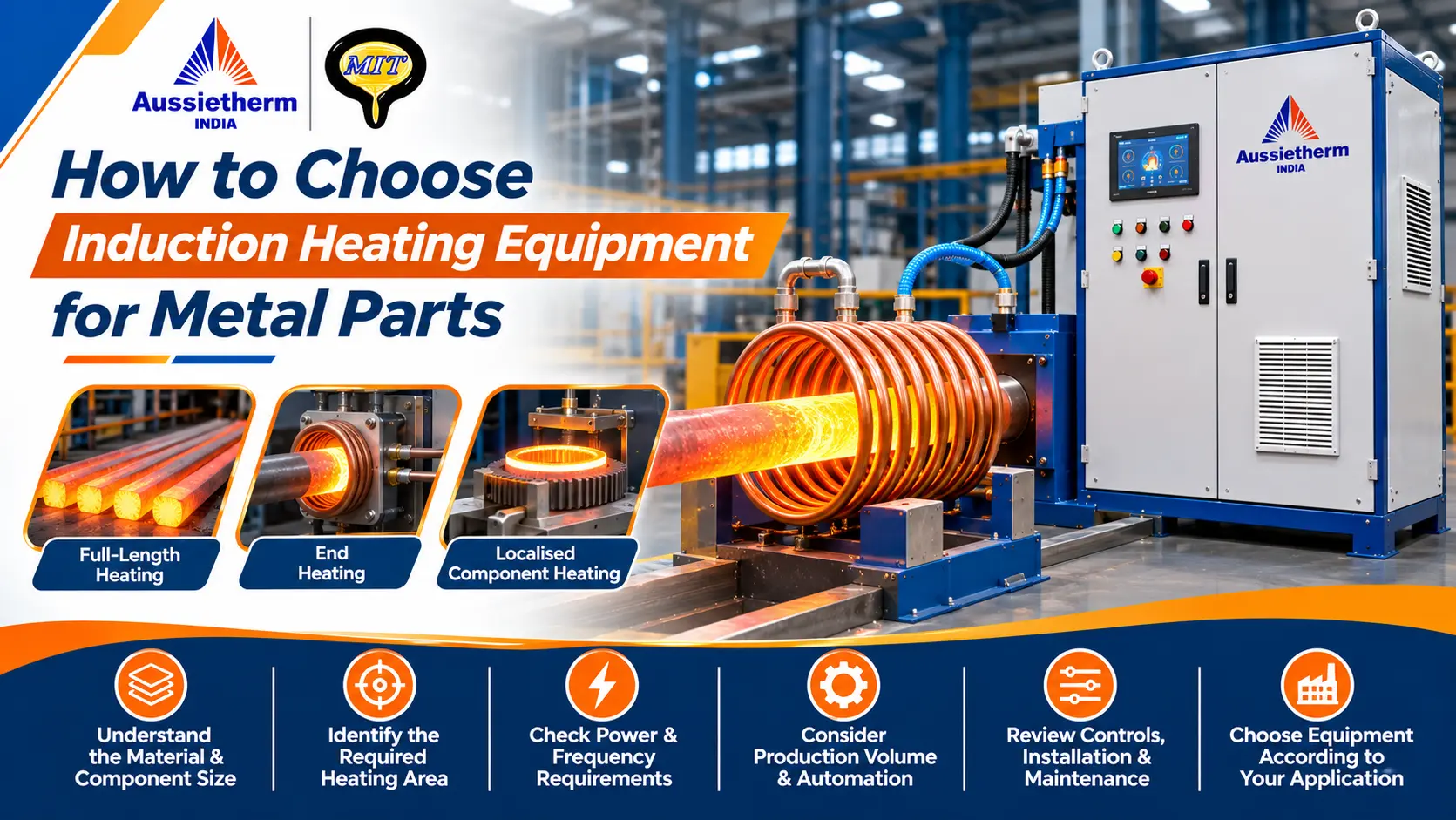
Choosing the right heating system is important for manufacturers working with metal components. Different parts need different heating temperatures, heating areas and processing times. The requirements for a steel bar may differ from those for a small machine component or a long metal rod. Induction Heating Equipment should therefore be selected according to the material, component size and intended application.
Aussie Therm India offers induction heating solutions for industrial applications, including bar, rod, billet and component heating. Understanding the main selection factors can help manufacturers choose equipment that suits their production needs.
Understand the Material and Component Size
The first step is to identify the type of metal that needs heating. Steel, stainless steel, copper, aluminium and other metals can have different heating requirements. The component's shape and dimensions also affect equipment selection.
For example, heating a long metal bar may require a different arrangement from heating a small component. Manufacturers should consider the length, diameter, weight and shape of the workpiece before finalising the equipment.
Sharing these details with the equipment provider helps establish the basic requirements for the heating system.
Identify the Required Heating Area
Not every manufacturing process requires the entire component to reach the same temperature. Some operations need uniform heating along the full length, while others require heat only at one end or a selected section.
1. Full-Length Heating
This method is suitable when a larger portion of a bar, rod or billet needs heating before the next manufacturing step. The equipment should match the component dimensions and the required production rate.
2. End Heating
End heating is useful when only one end of a metal part needs to be heated. It can be considered for applications involving bar ends, rods, tubes and certain machine components.
3. Localised Component Heating
Some processes require heating a specific area of a component. In these cases, the heating arrangement should match the required section and temperature. The component design and production process should be discussed before choosing the final setup.
Check Power and Frequency Requirements
Power and frequency are important technical factors when selecting Induction Heating Equipment. The suitable combination depends on the material, component size, heating depth, target temperature and required heating time.
Higher power alone does not automatically mean that a system is suitable for every application. The equipment must be matched to the actual heating task. Manufacturers should share their process details with the technical team so that the required power and frequency can be evaluated.
Aussie Therm India's induction heating product information lists power options from 15 kW to 8,000 kW and frequency options from 1 kHz to 100 kHz. The appropriate configuration depends on the specific application and should be confirmed with the company before purchase.
Consider Production Volume and Automation
Production quantity is another important factor. A workshop handling occasional batches may have different requirements from a factory that heats components throughout the day.
Before choosing a system, consider the number of parts processed per shift, loading and unloading arrangements, and the time available for each heating cycle. Automatic job insertion and job sensing may also be relevant for applications that require controlled component handling.
Manufacturers should discuss these requirements with the supplier to understand which features are available for their intended setup.
Review Controls, Installation and Maintenance
Equipment controls should allow operators to monitor and adjust the process according to operating requirements. Temperature control, operating displays, safety protections and suitable cooling arrangements are important points to discuss during equipment selection.
Installation space and utility requirements should also be checked before ordering. Buyers should ask about electrical connections, cooling water requirements, operator training, maintenance access and the availability of technical support.
Discussing these details with an Induction Heating Equipment Manufacturer helps buyers understand the equipment specifications and installation requirements before making a final decision.
Choose Equipment According to Your Application
The right selection begins with clear information about the metal, component dimensions, heating area and production target. Buyers should compare the technical specifications with their actual manufacturing requirements instead of choosing equipment based only on price or power rating.
An Induction Heating Equipment Manufacturer can help assess these details and explain the available options. Contact Aussie Therm India to discuss your metal heating application and identify a suitable system for your production process.
