
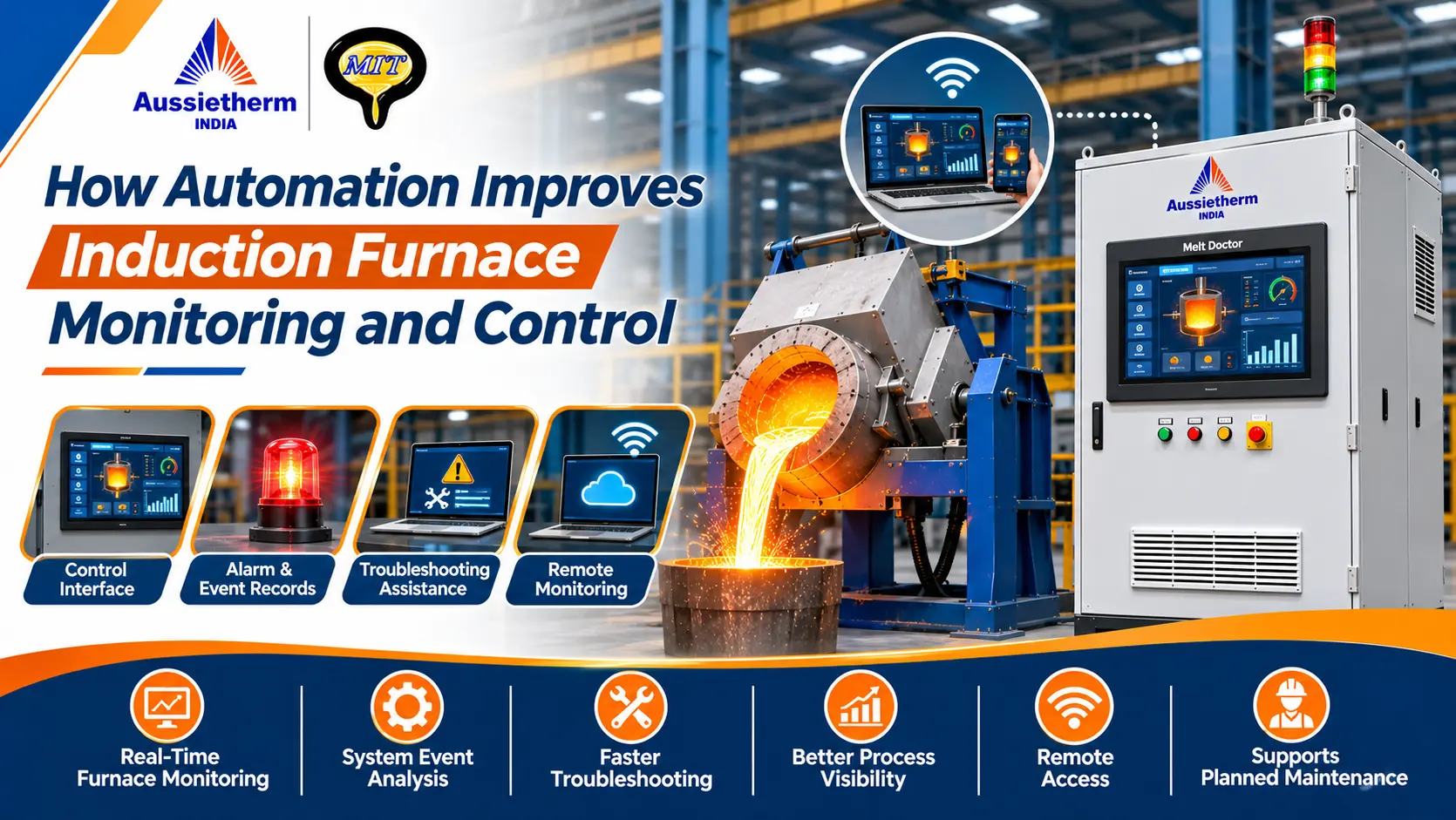
The induction furnace is used in the casting process to heat metal for various manufacturing applications. During the heating process, workers are supposed to monitor the performance of the equipment and disturbances during the process. Managing these tasks becomes easier when important system information is available through a control interface.
Aussie Therm India offers furnace automation solutions for industrial applications. With suitable Induction Furnace Automation, foundries can access operating information, review system events, and identify issues that may need attention.
Understanding Furnace Monitoring and Control
The automation systems provide information on furnace functions. Induction Furnace Automation helps the operators monitor the current state of the system and resolve any issues that arise.
In case the equipment fails due to an error or interruption, there may be an alarm which would inform the operator about it. The operator will then be able to analyse the provided information and perform the troubleshooting process.
Melt Doctor system, designed by Aussie Therm India, is a computerised system for automation of the furnace with troubleshooting features. Moreover, the system has a remote monitoring function with an internet connection. The mentioned capabilities can be useful in situations when the operators or technical personnel wish to analyse the system state without going to the control panel.
Important Features of Furnace Automation Systems
The available functions vary according to the equipment and system configuration. Before selecting a solution, foundries should understand the purpose of its main features.
- Control Interface: A control interface displays relevant furnace information in one place. Operators can use it to check the system status and review available operating details.
- Alarm and Event Records: Alarm records help operators identify when interruptions occurred. Maintenance teams can review these records while investigating recurring issues or planning equipment checks.
- Troubleshooting Assistance: Built-in troubleshooting support can guide operators towards possible causes of a problem. However, the instructions provided by the system should be followed along with the equipment manufacturer's safety procedures.
- Remote Monitoring: Remote monitoring allows authorised personnel to view supported system information through an internet connection. This feature may help technical teams review operating conditions when they are working from another location.
Buyers should confirm which monitoring functions are included in the system they intend to purchase.
Benefits to the Foundry Process
Automation may facilitate the systematic monitoring and collection of important equipment data during the manufacturing process. With alarm signals and operating details available from the control panel, it becomes possible to carry out a systematic analysis of interruptions.
Information on recorded events may assist in understanding the repetitive problems as well as troubleshooting and determining whether an inspection should be carried out.
Remote monitoring is yet another method of accessing system information that is supported by automation. It becomes useful when technical personnel are required to monitor the furnace from outside the production area.
But automation cannot take the place of skilled operators, inspections and safe working practices. Operators should still abide by the instructions of the equipment and alarms.
Selecting a Suitable Furnace Automation System
Before choosing an automation solution, foundries should consider their existing equipment and monitoring requirements. A Furnace Automation Manufacturer should explain system compatibility, available features, installation requirements, and technical support.
Buyers should review the following points:
- Compatibility with the existing or proposed induction furnace.
- Availability of alarms and troubleshooting functions.
- Remote monitoring options and access permissions.
- Ease of use for furnace operators.
- Maintenance support and training requirements.
- Technical documentation and operating instructions.
Discussing these points with a Furnace Automation Manufacturer helps buyers understand what the system includes and whether it matches their operational needs.
Conclusion
The automated furnaces provide a real method to check the state of the equipment, analyze any disruptions, and obtain operational data. It is important to choose a proper system based on the equipment and operational needs. Aussie Therm India can assist in obtaining information about the Melt Doctor automation system and determining the appropriate monitoring methods. Contact us to discuss your requirement.
