
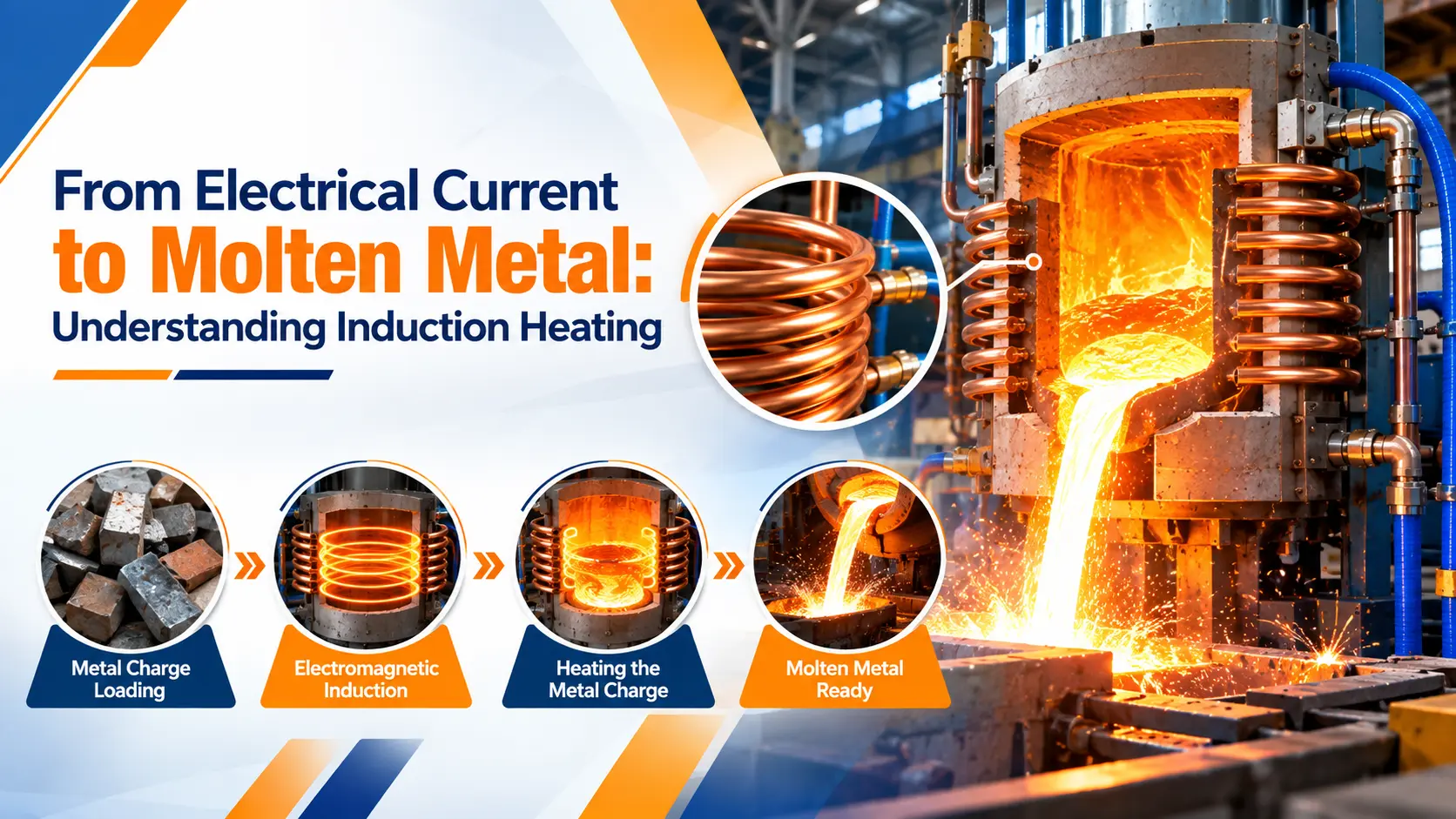
Aussietherm India provides induction heating and melting equipment for industries that work with metals. Rather than using flames or external heating elements, induction systems use electrical energy to generate heat within the metal itself, rather than in conventional furnaces. This makes an Induction Melting Furnace useful for foundries, forging units, and other metal-processing applications.
It sounds complicated, but the basic idea is simple. The Induction furnace coil assists with the power supply to generate an electromagnetic field around the metal charge. This results in heat being produced in the metal, and by degrees the metal changes from a solid charge to a molten one.
Starting With the Metal Charge
Every melting cycle begins with loading the required material into the furnace. Depending on the application, this may include iron, steel, aluminium, copper, scrap, or metal returns.
The size and arrangement of the charge can affect the heating process. Once the material is loaded, electrical energy is supplied to raise its temperature until the required melting point is reached.
When Electricity Meets the Metal
Alternating current passes through the coil surrounding the furnace and produces changes in the electromagnetic field.
When the metal charge enters this field, electrical currents are induced within the conductive material. The resistance of the metal converts these currents into heat. In simple terms, the metal heats up because of the magnetic field.
It is different from traditional heating, wherein heat needs to be transferred from an outside source into the material.
From Heating to Melting
As energy continues to enter the charge, its temperature rises. Smaller pieces begin to soften and melt, while the remaining solid material gradually joins the molten bath.
Once a liquid pool forms, movement within the bath helps distribute heat through the material. The furnace can provide energy till the required temperature is reached.
Melting time depends on various factors like the type of metal, charge weight, furnace capacity, and electricity consumed.
The Parts Working Behind the Process
Several components work together during induction melting. The power supply provides electrical energy, while the coil creates the electromagnetic field.
The furnace lining contains the molten metal and protects the surrounding structure. Cooling is equally important because the coil operates under electrical and thermal loads.
Aussietherm India uses copper tubing for its furnace coils and provides water-cooled arrangements to help manage heat during operation. Its cooling solutions can include fittings, hoses or tubing, filters, and other supporting components.
Keeping the System Reliable
A smooth melting cycle depends on regular attention to the equipment. Routine checks should be performed on cooling water circulation, electrical circuitry, furnace linings, and general operating conditions.
Lower rates of water flow, leaks, or deterioration of the refractory lining can have an impact on the furnace. Early detection can prevent any unexpected downtime of the equipment.
Industrial Uses of Induction Heating
Induction systems are used for various metal-processing applications, including:
- Iron and Steel Melting
- Aluminium Melting
- Copper Melting
- Forging Applications
- Foundry Operations
- Industrial Heating
The furnace arrangement depends on the material, production requirements, capacity, and operating conditions.
Induction Equipment for Metal Processing
Induction furnaces, power supplies, heating equipment, furnace automation, and cooling systems are available for different industrial applications. These components can be selected and combined based on specific heating and melting requirements. For consistent operation, an Induction Melting Furnace needs to work properly with the electrical supply, cooling arrangement, furnace lining, and other system components.
| Process Stage | Operational Mechanism & Functions |
|---|---|
| 1. Metal Charge Loading | Loading solid scrap, ingots, or returns into the refractory-lined crucible |
| 2. Electromagnetic Induction | High-frequency current flowing through the water-cooled copper coil creates intense magnetic flux |
| 3. Heat Generation (Eddy Currents) | Induced currents meet metal resistance, generating internal heat without surface flame |
| 4. Bath Stirring & Molten State | Electromagnetic stirring distributes heat uniformly until full molten liquefaction is reached |
Conclusion
Electromagnetic induction is the mechanism by which induction heating transforms electrical energy into heat. The coil produces the magnetic field; the metal produces induced currents, which produce heat until melting occurs.
A suitable Induction Melting Furnace, proper cooling, and compatible supporting equipment can help maintain stable heating conditions. Aussietherm India provides induction heating and melting equipment for different industrial metal-processing requirements.
Upgrade Your Foundry With Energy-Efficient Induction Melting
Explore our state-of-the-art induction melting furnaces and custom-designed copper coils engineered for maximum throughput.
